



Funeral Flowers: How to Choose the Right Tribute and Express Your Condolences
From funeral wreaths and sympathy sprays to thoughtful bouquets delivered to the family, discover how flowers can express love, remembrance and support when words are difficult to find.
There are moments in life when words simply do not seem enough. When someone loses a loved one, we often want to express our sympathy, show that we care and offer comfort — but finding the right way to do so can feel difficult.
Flowers have long been a meaningful way to express emotions that are hard to put into words. They can honour the memory of someone who has passed away, accompany a final farewell or offer a quiet message of support to a grieving family.
But not every floral arrangement serves the same purpose. Funeral wreaths, casket sprays, standing arrangements and sympathy bouquets each have their own place, depending on the ceremony, the relationship with the deceased and the wishes of the family.
Understanding these differences can help you choose flowers that feel appropriate, personal and sincer

1. Funeral Flowers: A Tribute to the Person Who Has Passed Away
Flowers at a funeral are more than decoration. They are a way to honour a life, acknowledge a loss and express respect for someone who will be deeply missed.
The type of arrangement often depends on the funeral service, local customs and the relationship between the person sending the flowers and the deceased.
Funeral Wreaths
A funeral wreath is one of the most recognisable forms of floral tribute. Its circular shape is often associated with continuity, remembrance and the enduring nature of love.
Wreaths may be sent by family members, friends, colleagues, organisations or other people wishing to pay their respects. They can be designed with traditional flowers such as roses, lilies, chrysanthemums and carnations, or with a more personal selection reflecting the individual's character and preferences.
Some wreaths are formal and understated, while others incorporate colours and flowers chosen to honour the person being remembered.
Standing Funeral Sprays
Standing arrangements are displayed on an easel and are commonly placed near the casket, at the ceremony venue or in another designated area.
They can be designed in many styles, from elegant, elongated arrangements to fuller compositions with a natural, garden-inspired appearance.
Standing sprays are often sent by extended family, friends, colleagues or groups who wish to express their condolences collectively.
Casket Sprays
A casket spray is a floral arrangement designed specifically to rest on the casket. It is generally chosen by the immediate family or by those organising the funeral.
Because it occupies a central place in the ceremony, its design is often especially personal. The flowers, colours and overall style may reflect the life, personality or favourite blooms of the person being remembered.
Funeral Bouquets and Smaller Arrangements
Not every floral tribute needs to be large. Smaller arrangements can be equally meaningful, particularly when space is limited or the family prefers a more understated ceremony.
A thoughtfully chosen bouquet can express sincere condolences without drawing attention away from the occasion itself.
Before ordering funeral flowers, it is always worth checking the family's wishes and the funeral home's arrangements. Some services have specific guidelines about where flowers may be placed, and some families prefer charitable donations or a different form of remembrance.

2. Sympathy Flowers: A Message of Support for the Family
There is another way to express condolences that can be just as meaningful: sending flowers directly to the grieving family.
While funeral flowers are intended primarily as a tribute during the ceremony, a sympathy bouquet delivered to someone's home offers a personal gesture of care and support.
It says, quietly and sincerely, I am thinking of you. I am sorry for your loss. You are not alone.
A bouquet may arrive in the days following a death, after the funeral or at another appropriate time when friends and relatives want to show their support.
This gesture can be particularly meaningful because grief does not end when the ceremony is over. The days and weeks afterwards may be difficult, as everyday life continues and the absence of a loved one becomes more apparent.
A beautiful arrangement can serve as a gentle reminder that others remember the person who has passed away and care about those left behind.

3. What Flowers Are Appropriate for Expressing Sympathy?
There is no single flower that is right for every funeral or every family. The most appropriate choice depends on personal preferences, cultural traditions, religious customs and the message you wish to convey.
Some flowers, however, are often chosen for their traditional associations.
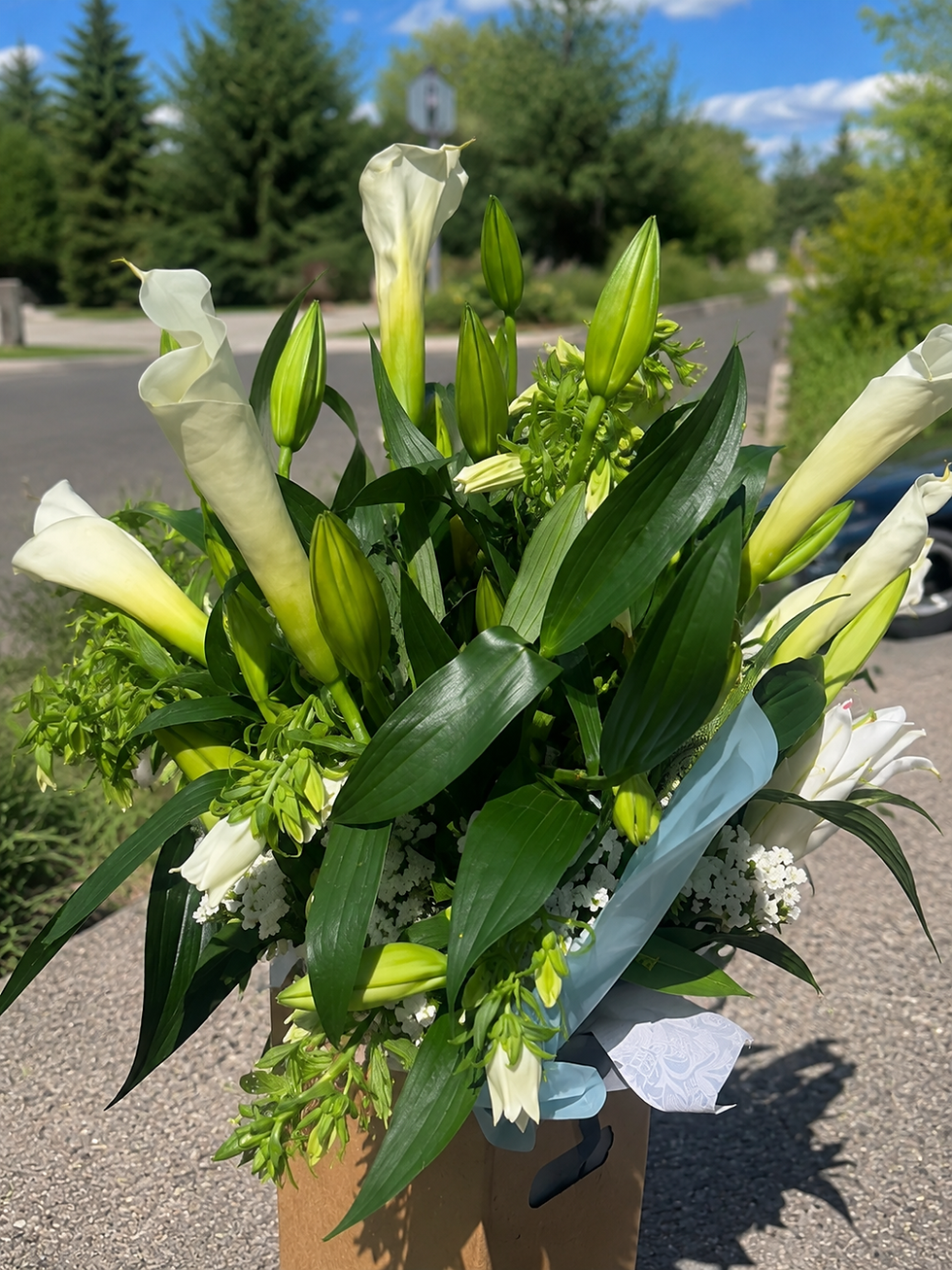
Lilies are frequently associated with peace, purity and the idea of a peaceful rest. Their elegant shape makes them a familiar choice for funeral arrangements.
Roses can express love, respect and remembrance. White roses often suit understated tributes, while pink roses may communicate affection and appreciation. Red roses can be appropriate when the arrangement is intended to express deep love.
Chrysanthemums are widely used in funeral and memorial flowers in many European traditions, including Polish customs. Their significance varies between cultures, so it is helpful to consider the family's background.
Carnations are valued for their lasting beauty and versatility. They can be used in traditional funeral arrangements as well as softer, more natural bouquets.
Orchids offer a graceful and understated way to express sympathy. Their refined appearance can be particularly suitable for a contemporary arrangement or a gift delivered to the family.
Ultimately, the meaning of a flower is not universal. A person's favourite flower, a colour that reminds the family of them or a simple arrangement chosen with care may be more meaningful than following a traditional list.

4. Should Sympathy Flowers Be White?
White is one of the most traditional colours for funeral flowers. It is often associated with peace, respect, simplicity and remembrance.
White roses, lilies and chrysanthemums can create an elegant arrangement that feels calm and appropriate for a formal farewell.
However, white is not the only suitable choice.
Soft pinks, gentle creams, pale lavender and muted greens can create a warm and comforting expression of sympathy. Deeper colours may also be appropriate when they reflect the personality of the deceased or the family's preferences.
For someone who loved a colourful garden, a natural arrangement with seasonal flowers may feel more personal than a strictly white design. For another person, a simple arrangement in neutral tones may be exactly right.
The goal is not to follow a rigid colour rule. It is to choose flowers that communicate respect and consideration.

5. What Is the Difference Between Funeral Flowers and Sympathy Flowers?
Although the terms are sometimes used interchangeably, they can refer to different gestures.
Funeral flowers are generally intended for the ceremony or memorial service. These may include wreaths, standing sprays, casket arrangements and other floral tributes.
Sympathy flowers are often sent directly to the home of the bereaved family. They are intended to offer comfort and acknowledge the family's loss, whether before or after the funeral.
The distinction is useful when ordering flowers because it helps determine the appropriate size, style, delivery location and message.
If you are unsure which arrangement to choose, consider three questions:
Where will the flowers be delivered or displayed?
What is your relationship with the deceased or their family?
Would a formal tribute or a personal gesture of support be more appropriate?
The answers will usually help guide your choice.
6. What Should You Write on a Funeral Flower Card?
Finding the right words can be one of the hardest parts of expressing sympathy. A message does not need to be long or elaborate to be meaningful.
For a funeral tribute, a simple message may be most appropriate:
In loving memory.
Forever remembered, never forgotten.
With deepest sympathy and heartfelt condolences.
Rest in peace. You will be deeply missed.
For flowers sent directly to the family, a more personal message may feel right:
Thinking of you and your family during this difficult time.
With heartfelt sympathy and love.
May the memories you cherish bring you comfort in the days ahead.
Sending you strength, love and our deepest condolences.
If you knew the person who passed away, you might include a brief, sincere memory or mention a quality you will always remember about them.
There is no need to find a perfect sentence. A few genuine words are enough.
7. When Is the Right Time to Send Sympathy Flowers?
Funeral flowers are usually arranged for delivery to the funeral home, church or other ceremony venue according to the funeral director's instructions.
Sympathy flowers for the family offer more flexibility. They may be sent shortly after hearing the news, in the days surrounding the funeral or later, when the family may appreciate a reminder that they are still being thought of.
If the family has requested privacy, limited visitors or donations in place of flowers, those wishes should always take priority.
It is also worth confirming the delivery address and timing before ordering. A little practical consideration can make the gesture easier for the recipient.
8. A Thoughtful Alternative: Flowers That Reflect a Life
The most meaningful floral tributes are not always the most traditional ones.
Sometimes, the right arrangement is inspired by the person's favourite flowers, a much-loved colour or a garden they spent years tending. It might be a simple bouquet of seasonal blooms, a graceful arrangement of roses or a composition that feels natural and understated.
For a family receiving sympathy flowers at home, the arrangement may be chosen with a slightly different intention: to bring a little beauty into a difficult day without asking anything in return.
There is no need to make the gesture elaborate. What matters is the thought behind it and the care with which it is offered.

Flowers Can Speak When Words Are Difficult
Loss is deeply personal, and everyone experiences grief differently. There is no perfect arrangement that can take away the pain of losing someone, and no single gesture can replace the comfort of time, family and support.
But flowers can communicate something important. They can honour a life, express respect and remind a grieving person that others are thinking of them.
Whether you choose a funeral wreath, a standing floral tribute or a bouquet delivered to the family's home, the most meaningful choice is one made with sensitivity and care.
At Sweets & Florals Sisters, we understand that flowers are sometimes chosen for life's most difficult moments. We believe that every farewell deserves thoughtfulness, every tribute should be treated with respect, and every gesture of sympathy should come from the heart.
Because when words are difficult to find, a carefully chosen arrangement can offer a quiet message of love, remembrance and support.


Comments